July 20, 2026
July 20, 2026
Why You Should Stop Waiting for Your Body to Change Before You Let Yourself Feel Beautiful
Stop waiting to feel beautiful before your body changes. I hear the same sentence almost every week. Some version of: I want to book, but I want to lose fifteen pounds first. Or tone up first. Or fit back into a certain size. Or fix the one part of my body I have hated since I was fourteen. It sounds practical. It sounds responsible, even. But after years of photographing women in their most vulnerable state, I can tell you what is usually underneath it, and it is almost never about weight. Here is the thing I most want you to hear: changing your body is not the same as changing your relationship with your body. Those are two entirely different projects. If you only ever do the first one, insecurity tends to follow you into every new version of yourself. It just finds somewhere new to live.
Table of Contents
Waiting for Your Body to Change Is Usually Fear in Disguise
The fear is rarely about the weight
When a client tells me she wants to lose weight before booking, what she is often telling me is that she is afraid of being seen.
And honestly? That fear makes sense. A boudoir session asks a lot of you. You are in lingerie in front of someone you have only recently met. You are sitting face-to-face with insecurities you have carried for years. You are challenging beauty standards that are woven into the most ordinary parts of your life: how you eat, how you move, what you wear, what you allow yourself to enjoy.
Waiting is a way to postpone all of that. It lets you avoid truly seeing yourself, and it lets you avoid being perceived exactly as you are right now.
Familiar standards feel safe, even when they hurt us
It is genuinely daunting to question the standards you grew up inside. Even harmful beliefs can feel safe simply because they are familiar.
And there is an entire economy built on keeping you insecure. The more we dislike ourselves, the more willing we are to spend money fixing ourselves. Surgery, programs, trainers, new clothes, the next thing. That is not an accident.
None of this means health does not matter. It means the standards being sold to us do not automatically serve our health or our relationship with our bodies.
There is no final, permanently perfect body
Your body changes. Through age, stress, pregnancy, medication, illness, hormones, grief, joy, and plain ordinary living. And as your body changes, your insecurities move with it. They shift, they fluctuate, they attach themselves to a new shape or a new feature.
If you are waiting for a body with no insecurities attached to it, you will wait forever. Not as a dramatic statement. Literally. That body does not arrive.
Changing Your Appearance Does Not Automatically Heal the Insecurity
Insecurity is deeper than the feature it lands on
Insecurity is rarely about one stomach, one number, or one clothing size. That feature is just where it landed. The root usually goes back much further: comparison, criticism, perfectionism, shame, or years of quiet messaging about what a woman is supposed to look like.
You cannot solve that from the surface, because that is not where it lives.
The target evolves
This is the part I wish more women understood before they postpone their lives.
Look at what happens with rapid weight loss, including with GLP-1 medications. Someone reaches the goal she has chased for years, and then suddenly she does not like her face because she lost volume there. Or she is unhappy with her breasts and starts researching surgery. The original goal was met. The insecurity just relocated.
You also see it on both ends of the spectrum. I have photographed very thin women who desperately want to gain weight because they believe they are too small, and women at a perfectly healthy weight who feel enormous pressure to shrink. Both groups believe their bodies are wrong. That alone tells you the problem is not solved by moving closer to one physical ideal.
I see this happen a lot with women postpartum. There is immense pressure for your body to rebound immediately and to undergo zero changes, but that is extremely unrealistic. Rather than scrutinizing your body, set aside time to do a boudoir shoot and reconnect with your body in its postpartum glory. Because once you start to appreciate it, its changes will bother you significantly less and you will start to see them as beautiful.
Health and self-punishment are not the same thing
Caring about your health is good. I want you to live a long, strong, energetic life.
The question is whether your habits are acts of care or acts of correction. Are you moving your body because it feels good and supports your life, or because you are trying to erase the body you currently have? One of those builds a relationship with yourself. The other slowly dismantles it.
And either way, you do not have to withhold beauty, photographs, intimacy, clothing, or joy from yourself while you pursue it.
What Actually Happens When a Client Stops Waiting
She almost always shows up nervous
Here is the beginning of nearly every session I shoot: she walks in excited and anxious at the same time. She is not entirely sure booking was the right move. She has probably thought about canceling at least once.
That is not a sign she was not ready. That is what doing something vulnerable before you feel certain looks like. Certainty is not a prerequisite. If you want to know exactly what the day involves before you commit, I walk through the whole thing in what a boudoir session actually is.
Confidence grows during the session, not before it
Once we start shooting, something shifts. With guidance, conversation, movement, music, and a lot of reassurance, she starts to reconnect with herself. I watch her confidence build in real time.
This is also where the “bad side” myth falls apart. So many women tell me they have a bad side or that they photograph badly from certain angles. Usually that belief comes from the photographs they have seen of themselves before: bad lighting, repetitive angles, phone cameras held above a dinner table. It does not mean that part of her body cannot be photographed beautifully. It means no one has ever bothered to.
By the time she leaves, she is comfortable in the lingerie she agonized over choosing. (If you are already spiraling about that part, I wrote a full guide on what to wear to your boudoir photoshoot.)
The reveal changes the perspective
About nine out of ten clients sit down at their reveal and say some version of: I cannot believe that is me.
They say it again at the next image. And the next. Not because they suddenly look different, but because they have never seen themselves photographed with that much perspective, care, and attention. Most women have only ever seen themselves through a lens that was looking for flaws.
A Client Story: Seeing the Insecurity Without Hating It
One client told me something after her reveal that has stayed with me.
She could still see the parts of her body she had been most insecure about. The photographs did not hide them, and I did not erase them. They were right there.
But she did not hate them.
In every photograph she had seen of herself before, she was hyper-fixated on that one feature. She would write off an entire beautiful image because of it. In these, she was not distracted by it, because she could not get over how beautiful she looked as a whole. The insecurity was still visible. It just stopped running the photograph.
That is the goal. Not pretending every insecurity vanishes in a single afternoon. I do not think we fully unlearn a lifetime of standards in one day. But one experience can put a real crack in those beliefs. It shows you that your body can be visible, imperfect, and still genuinely beautiful.
What You Lose by Postponing It
You miss the chance to document who you are right now
Life is fleeting. We do not know what is coming. If you spend this decade waiting for a future body, you lose the opportunity to capture the woman you are in this one.
And even if you do lose the weight, and even if you book again later, the body you have today still deserves to be seen and appreciated. It is not a placeholder.
Future you is not going to care about five pounds
Ten years from now, you are not going to look at these photographs and think, I should have lost five pounds first.
You are going to notice how beautiful you were. How much life you had. How grateful you are that someone preserved that version of you.
You hand outside standards authority over your life
Every time you delay the clothes, the celebration, the intimacy, the photographs, or the confidence until an external standard approves of your body, you give that standard power over your daily life.
Why should anyone else get that power?
The sooner you build intimacy and trust within yourself, the harder it becomes for other people, or the culture at large, to keep you small. When you genuinely value the body that has carried you through your entire life, you become very difficult to shrink, even as that body keeps changing.
What Letting Yourself Feel Beautiful Now Actually Looks Like
This is not only about booking a session. Most of it happens in ordinary life:
- Stop punishing yourself over small things. You skipped the gym. You ate something you enjoyed. You did not follow the plan perfectly. None of that requires penance.
- Wear the shorts. Even if they show your stomach. Who cares. Take the photo. Go to the event. Let yourself exist without constantly trying to mold your body into someone else’s.
- Treat health as care, not correction. Move and eat in ways that support your energy, strength, and longevity, not in ways designed to punish or erase the body you have.
- Practice seeing yourself. Look in the mirror and say something kind, out loud, before every insecurity has been resolved. Beauty is not the reward at the end of a transformation.
How I Help Clients Feel Safe Enough to Be Seen
You will never be left to figure out posing on your own
I do not stand a client in front of a camera and say “okay, pose.” My clients are not professional models. They have not spent years studying how a body reads through a lens. I have. Posing is my job, not theirs. I guide every single frame.
The session is a conversation, not an evaluation
A photoshoot should never feel silent or clinical. There is music. There is talking. There is dancing and laughing and a lot of genuinely bad jokes.
If I stood there quietly observing you, of course you would feel uncomfortable. Anyone would. When I am talking with you, asking about your life, and making it fun, you relax, and it shows in every image.
We start where you feel safe
I learn about my clients’ insecurities and comfort levels before the session. I do not open with poses that will immediately make someone feel exposed. We build trust first, then the session progresses at a pace that feels safe. That approach is the same reason I believe so strongly that boudoir belongs to mothers too, and to anyone who has been told her body’s season for being seen has passed.
You Do Not Have to Earn Beauty or Confidence
When a woman tells me she has to lose weight before she is allowed to feel confident, or beautiful, or before she is allowed a boudoir session, I ask her one thing:
Why?
Where did you learn that? Who taught you that a loving relationship with your own body is something you have to qualify for? Why is it available only to a hypothetical future version of you, and not to the person sitting here right now?
Confidence is not a prize handed out at the finish line. It is something you deserve by existing. A future you is not more entitled to kindness than present you.
The real work is not achieving. It is unlearning: identifying where the belief came from, asking whose interests it actually serves, and letting it go.
Why This Is Personal for Me
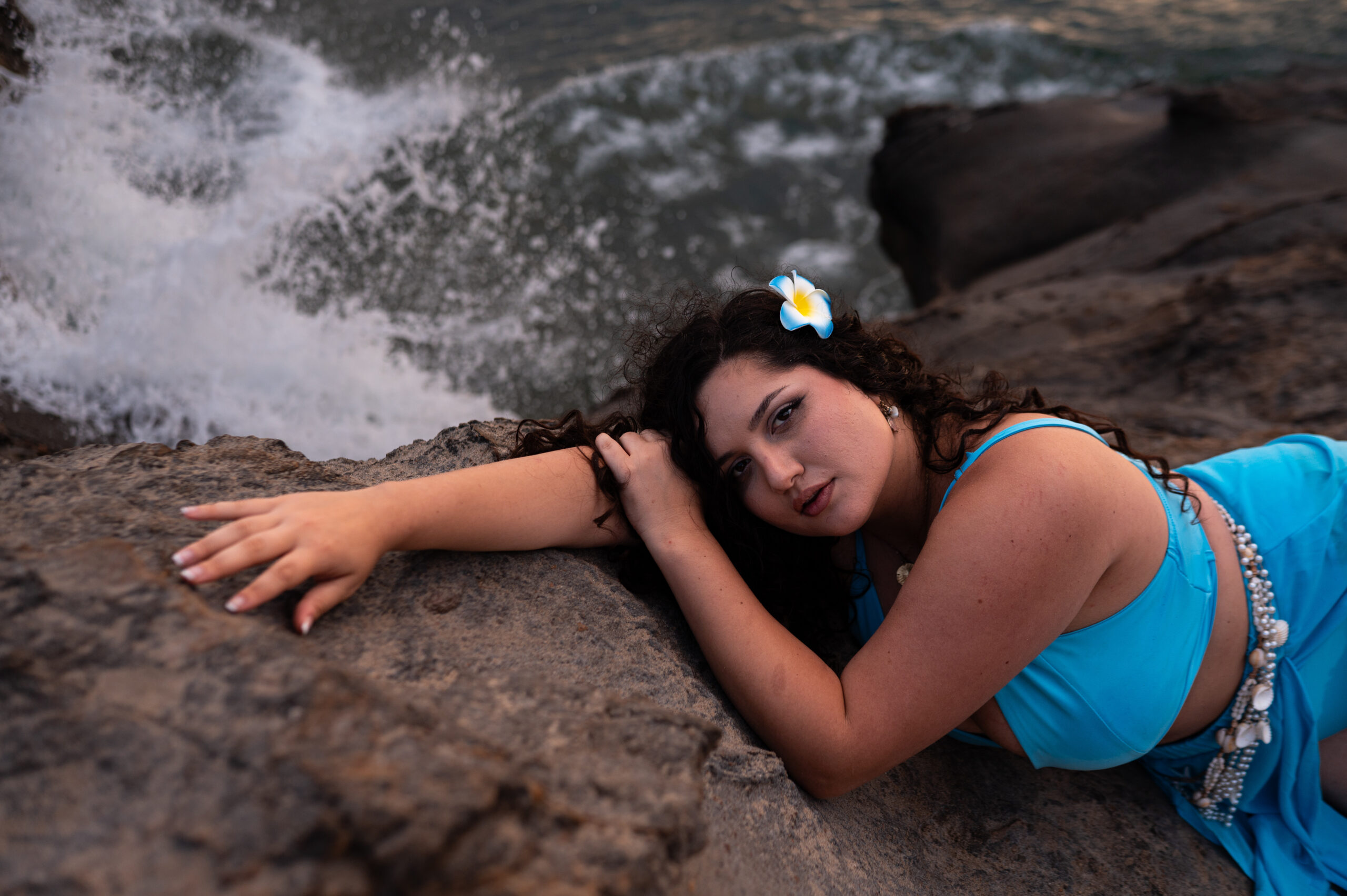
Boudoir and self-portraiture changed how I see myself. It changed how much I liked myself, how confident I felt, how I related to my own sexuality. It let me feel beautiful in a way I had not before.
That is the entire reason I do this work. Not to push every woman toward the same standard. The opposite. I want each client to leave knowing she is already beautiful in her own specific way, no edits required.
Because we are not all supposed to look the same, and many of the standards we have absorbed do not support our health or our happiness. If you spend enough years trying to contort yourself into them, you end up with a body you have changed and a self you still do not like. If you want more on how this shifts, I wrote about how boudoir builds real confidence.
The Truth to Remember When You Think, “I’ll Feel Beautiful Once My Body Changes”
You may be waiting until you are in your grave. I mean that as gently as it can possibly be meant.
There is no guarantee that a changed body delivers a changed mind. Without the inner work, you can arrive at the goal and feel exactly the same. A new insecurity appears. Someone makes another comment. And often, there are things about your body right now that you actually like, things that may change too.
You do not wake up one morning suddenly feeling beautiful. You get there by doing the work: questioning what you were taught, changing how you speak to yourself, allowing yourself to be seen, and refusing to let insecurity make your decisions for you.
So stop waiting. Take up space. Wear the thing. Get the photographs. Celebrate your life now, not in the imaginary future where you have finally earned it. Learn more about the posing process and how I work to make sure you feel confident, beautiful and comfortable posing throughout your boudoir experience.
Your Body Is Not a Before Photo
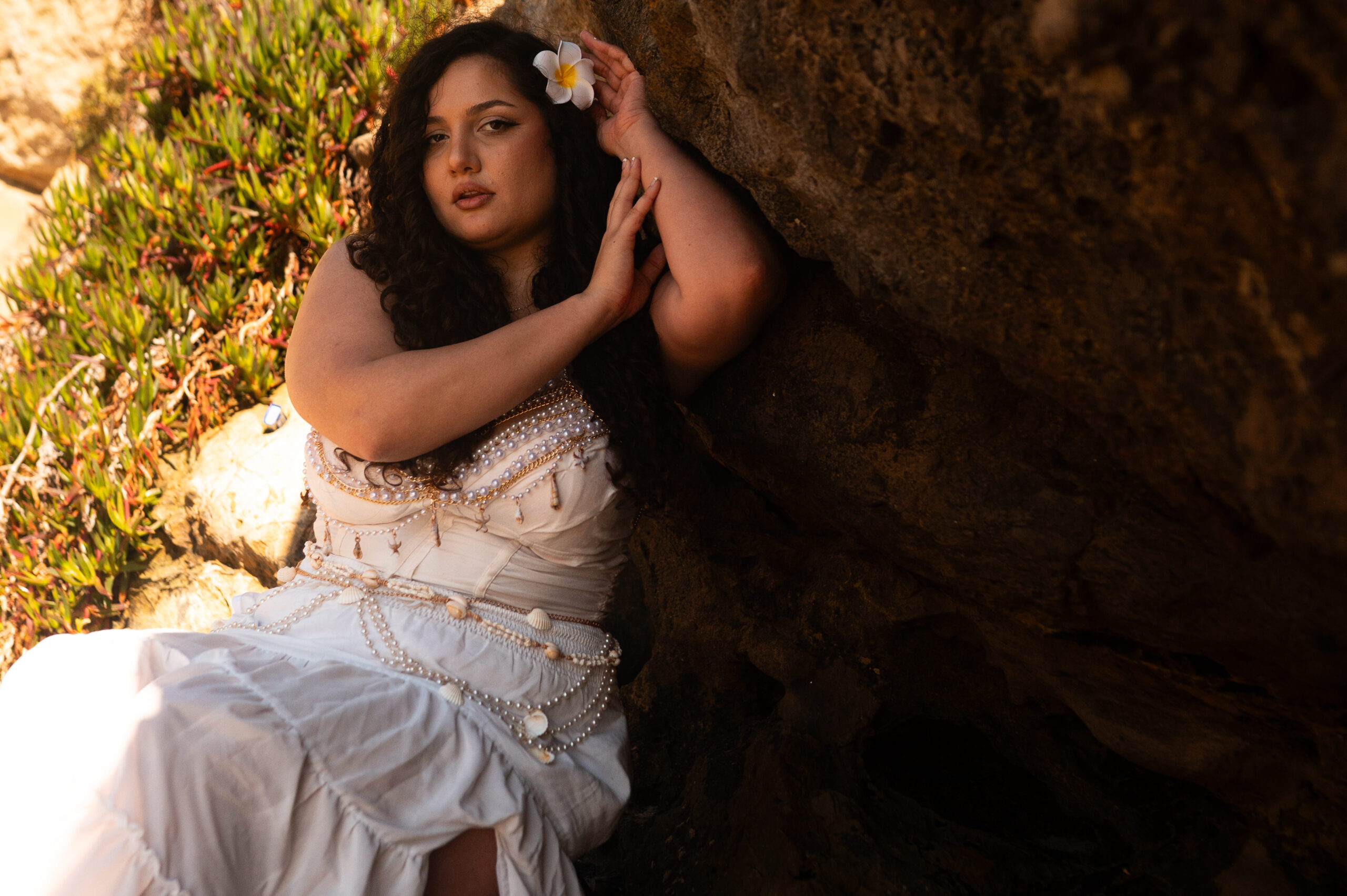
Your body is not the unfinished draft of some better body coming later. It has carried you through everything you have survived so far. It deserves care, recognition, and documentation, not a holding pattern.
You are allowed to have goals. You are not required to withhold beauty from yourself while you pursue them.
So ask yourself honestly: what have you been postponing? And what would it feel like to stop waiting for permission?
When you are ready, you can see session details and investment here. No goal weight required.
Stop waiting to feel beautiful before your body changes. I hear the same sentence almost every week. Some version of: I want to book, but I want to lose fifteen pounds first. Or tone up first. Or fit back into a certain size. Or fix the one part of my body I have hated since I was fourteen. It sounds practical. It sounds responsible, even. But after years of photographing women in their most vulnerable state, I can tell you what is usually underneath it, and it is almost never about weight. Here is the thing I most want you to hear: changing your body is not the same as changing your relationship with your body. Those are two entirely different projects. If you only ever do the first one, insecurity tends to follow you into every new version of yourself. It just finds somewhere new to live.
Table of Contents
Waiting for Your Body to Change Is Usually Fear in Disguise
The fear is rarely about the weight
When a client tells me she wants to lose weight before booking, what she is often telling me is that she is afraid of being seen.
And honestly? That fear makes sense. A boudoir session asks a lot of you. You are in lingerie in front of someone you have only recently met. You are sitting face-to-face with insecurities you have carried for years. You are challenging beauty standards that are woven into the most ordinary parts of your life: how you eat, how you move, what you wear, what you allow yourself to enjoy.
Waiting is a way to postpone all of that. It lets you avoid truly seeing yourself, and it lets you avoid being perceived exactly as you are right now.
Familiar standards feel safe, even when they hurt us
It is genuinely daunting to question the standards you grew up inside. Even harmful beliefs can feel safe simply because they are familiar.
And there is an entire economy built on keeping you insecure. The more we dislike ourselves, the more willing we are to spend money fixing ourselves. Surgery, programs, trainers, new clothes, the next thing. That is not an accident.
None of this means health does not matter. It means the standards being sold to us do not automatically serve our health or our relationship with our bodies.
There is no final, permanently perfect body
Your body changes. Through age, stress, pregnancy, medication, illness, hormones, grief, joy, and plain ordinary living. And as your body changes, your insecurities move with it. They shift, they fluctuate, they attach themselves to a new shape or a new feature.
If you are waiting for a body with no insecurities attached to it, you will wait forever. Not as a dramatic statement. Literally. That body does not arrive.
Changing Your Appearance Does Not Automatically Heal the Insecurity
Insecurity is deeper than the feature it lands on
Insecurity is rarely about one stomach, one number, or one clothing size. That feature is just where it landed. The root usually goes back much further: comparison, criticism, perfectionism, shame, or years of quiet messaging about what a woman is supposed to look like.
You cannot solve that from the surface, because that is not where it lives.
The target evolves
This is the part I wish more women understood before they postpone their lives.
Look at what happens with rapid weight loss, including with GLP-1 medications. Someone reaches the goal she has chased for years, and then suddenly she does not like her face because she lost volume there. Or she is unhappy with her breasts and starts researching surgery. The original goal was met. The insecurity just relocated.
You also see it on both ends of the spectrum. I have photographed very thin women who desperately want to gain weight because they believe they are too small, and women at a perfectly healthy weight who feel enormous pressure to shrink. Both groups believe their bodies are wrong. That alone tells you the problem is not solved by moving closer to one physical ideal.
I see this happen a lot with women postpartum. There is immense pressure for your body to rebound immediately and to undergo zero changes, but that is extremely unrealistic. Rather than scrutinizing your body, set aside time to do a boudoir shoot and reconnect with your body in its postpartum glory. Because once you start to appreciate it, its changes will bother you significantly less and you will start to see them as beautiful.
Health and self-punishment are not the same thing
Caring about your health is good. I want you to live a long, strong, energetic life.
The question is whether your habits are acts of care or acts of correction. Are you moving your body because it feels good and supports your life, or because you are trying to erase the body you currently have? One of those builds a relationship with yourself. The other slowly dismantles it.
And either way, you do not have to withhold beauty, photographs, intimacy, clothing, or joy from yourself while you pursue it.
What Actually Happens When a Client Stops Waiting
She almost always shows up nervous
Here is the beginning of nearly every session I shoot: she walks in excited and anxious at the same time. She is not entirely sure booking was the right move. She has probably thought about canceling at least once.
That is not a sign she was not ready. That is what doing something vulnerable before you feel certain looks like. Certainty is not a prerequisite. If you want to know exactly what the day involves before you commit, I walk through the whole thing in what a boudoir session actually is.
Confidence grows during the session, not before it
Once we start shooting, something shifts. With guidance, conversation, movement, music, and a lot of reassurance, she starts to reconnect with herself. I watch her confidence build in real time.
This is also where the “bad side” myth falls apart. So many women tell me they have a bad side or that they photograph badly from certain angles. Usually that belief comes from the photographs they have seen of themselves before: bad lighting, repetitive angles, phone cameras held above a dinner table. It does not mean that part of her body cannot be photographed beautifully. It means no one has ever bothered to.
By the time she leaves, she is comfortable in the lingerie she agonized over choosing. (If you are already spiraling about that part, I wrote a full guide on what to wear to your boudoir photoshoot.)
The reveal changes the perspective
About nine out of ten clients sit down at their reveal and say some version of: I cannot believe that is me.
They say it again at the next image. And the next. Not because they suddenly look different, but because they have never seen themselves photographed with that much perspective, care, and attention. Most women have only ever seen themselves through a lens that was looking for flaws.
A Client Story: Seeing the Insecurity Without Hating It
One client told me something after her reveal that has stayed with me.
She could still see the parts of her body she had been most insecure about. The photographs did not hide them, and I did not erase them. They were right there.
But she did not hate them.
In every photograph she had seen of herself before, she was hyper-fixated on that one feature. She would write off an entire beautiful image because of it. In these, she was not distracted by it, because she could not get over how beautiful she looked as a whole. The insecurity was still visible. It just stopped running the photograph.
That is the goal. Not pretending every insecurity vanishes in a single afternoon. I do not think we fully unlearn a lifetime of standards in one day. But one experience can put a real crack in those beliefs. It shows you that your body can be visible, imperfect, and still genuinely beautiful.
What You Lose by Postponing It
You miss the chance to document who you are right now
Life is fleeting. We do not know what is coming. If you spend this decade waiting for a future body, you lose the opportunity to capture the woman you are in this one.
And even if you do lose the weight, and even if you book again later, the body you have today still deserves to be seen and appreciated. It is not a placeholder.
Future you is not going to care about five pounds
Ten years from now, you are not going to look at these photographs and think, I should have lost five pounds first.
You are going to notice how beautiful you were. How much life you had. How grateful you are that someone preserved that version of you.
You hand outside standards authority over your life
Every time you delay the clothes, the celebration, the intimacy, the photographs, or the confidence until an external standard approves of your body, you give that standard power over your daily life.
Why should anyone else get that power?
The sooner you build intimacy and trust within yourself, the harder it becomes for other people, or the culture at large, to keep you small. When you genuinely value the body that has carried you through your entire life, you become very difficult to shrink, even as that body keeps changing.
What Letting Yourself Feel Beautiful Now Actually Looks Like
This is not only about booking a session. Most of it happens in ordinary life:
- Stop punishing yourself over small things. You skipped the gym. You ate something you enjoyed. You did not follow the plan perfectly. None of that requires penance.
- Wear the shorts. Even if they show your stomach. Who cares. Take the photo. Go to the event. Let yourself exist without constantly trying to mold your body into someone else’s.
- Treat health as care, not correction. Move and eat in ways that support your energy, strength, and longevity, not in ways designed to punish or erase the body you have.
- Practice seeing yourself. Look in the mirror and say something kind, out loud, before every insecurity has been resolved. Beauty is not the reward at the end of a transformation.
How I Help Clients Feel Safe Enough to Be Seen
You will never be left to figure out posing on your own
I do not stand a client in front of a camera and say “okay, pose.” My clients are not professional models. They have not spent years studying how a body reads through a lens. I have. Posing is my job, not theirs. I guide every single frame.
The session is a conversation, not an evaluation
A photoshoot should never feel silent or clinical. There is music. There is talking. There is dancing and laughing and a lot of genuinely bad jokes.
If I stood there quietly observing you, of course you would feel uncomfortable. Anyone would. When I am talking with you, asking about your life, and making it fun, you relax, and it shows in every image.
We start where you feel safe
I learn about my clients’ insecurities and comfort levels before the session. I do not open with poses that will immediately make someone feel exposed. We build trust first, then the session progresses at a pace that feels safe. That approach is the same reason I believe so strongly that boudoir belongs to mothers too, and to anyone who has been told her body’s season for being seen has passed.
You Do Not Have to Earn Beauty or Confidence
When a woman tells me she has to lose weight before she is allowed to feel confident, or beautiful, or before she is allowed a boudoir session, I ask her one thing:
Why?
Where did you learn that? Who taught you that a loving relationship with your own body is something you have to qualify for? Why is it available only to a hypothetical future version of you, and not to the person sitting here right now?
Confidence is not a prize handed out at the finish line. It is something you deserve by existing. A future you is not more entitled to kindness than present you.
The real work is not achieving. It is unlearning: identifying where the belief came from, asking whose interests it actually serves, and letting it go.
Why This Is Personal for Me
Boudoir and self-portraiture changed how I see myself. It changed how much I liked myself, how confident I felt, how I related to my own sexuality. It let me feel beautiful in a way I had not before.
That is the entire reason I do this work. Not to push every woman toward the same standard. The opposite. I want each client to leave knowing she is already beautiful in her own specific way, no edits required.
Because we are not all supposed to look the same, and many of the standards we have absorbed do not support our health or our happiness. If you spend enough years trying to contort yourself into them, you end up with a body you have changed and a self you still do not like. If you want more on how this shifts, I wrote about how boudoir builds real confidence.
The Truth to Remember When You Think, “I’ll Feel Beautiful Once My Body Changes”
You may be waiting until you are in your grave. I mean that as gently as it can possibly be meant.
There is no guarantee that a changed body delivers a changed mind. Without the inner work, you can arrive at the goal and feel exactly the same. A new insecurity appears. Someone makes another comment. And often, there are things about your body right now that you actually like, things that may change too.
You do not wake up one morning suddenly feeling beautiful. You get there by doing the work: questioning what you were taught, changing how you speak to yourself, allowing yourself to be seen, and refusing to let insecurity make your decisions for you.
So stop waiting. Take up space. Wear the thing. Get the photographs. Celebrate your life now, not in the imaginary future where you have finally earned it. Learn more about the posing process and how I work to make sure you feel confident, beautiful and comfortable posing throughout your boudoir experience.
Your Body Is Not a Before Photo
Your body is not the unfinished draft of some better body coming later. It has carried you through everything you have survived so far. It deserves care, recognition, and documentation, not a holding pattern.
You are allowed to have goals. You are not required to withhold beauty from yourself while you pursue them.
So ask yourself honestly: what have you been postponing? And what would it feel like to stop waiting for permission?
When you are ready, you can see session details and investment here. No goal weight required.